Train Photography
First, to be clear, I’m talking here about taking photos on and from a train, not of a train. There are lots of train enthusiasts out there and I’m often blown away by the quality of the better amateur and pro train photographers. I love grainy black and whites of trains, old train stations, even the expressions of people waiting in stations for their trains.
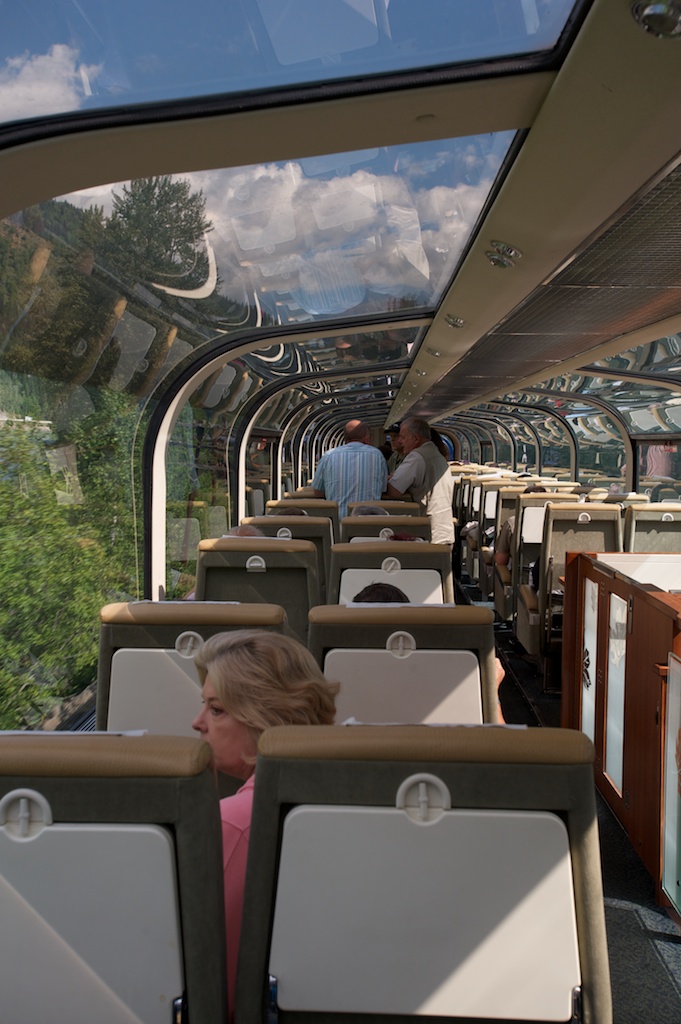
On this Grand Loop trip I took, I faced the challenge of getting decent photos from a moving train. Images taken onboard the train aren’t too difficult. The inside of the train tends to be in shadow, while the outside is usually bright. That creates severe contrast problems and balancing exposure is tricky, but doable.
As a landscape and nature photographer, I always try to use a low ISO, almost always no higher than 200. I want as much fine detail as my sensor can give me. But a train is constantly rocking and rolling and the wheels transmit vibrations to the cars. I find myself having to shoot at ISO 400 and even 800 on occasion in order to get a fast enough shutter speed to capture the onboard action, like images of the chef preparing meals or people enjoying themselves.
I also use a tripod for probably 75% of my outdoor work, but on a train, of course, that’s impossible and would add no real advantage due to the train movements.
Shooting outdoor scenes from a moving train is challenging. Aside from train movements and your own hand-holding shakes, now you’ve got constantly changing light to deal with, changes that are far different than those I face as a landscape artist. Usually shifting patterns of light are gradual (note I said usually). On a train, the light changes come at you at 50 or 60 miles per hour.
A train spends a huge chunk of its time traveling in virtual tunnels; trees grow up alongside the tracks, forming corridors that seem always to be impinging on shots. You see a scene, you rush to frame it, fiddle with the aperture and speed and just when you press the shutter a row of tall trees barrels into view.
In any event, the name of the game for train shooting is speed. With today’s sensors on DSLRs, you can shoot at ISO 400 or 800 with few problems. On a point-and-shoot the problems of shooting aboard a train may be thornier. If you have a high-end point-and-shoot, try upping the ISO and see if you can shoot in Aperture-priority mode. If you have the ability to change the aperture, then switch to a wider aperture. You may lose some depth of field, but rescue the shot.
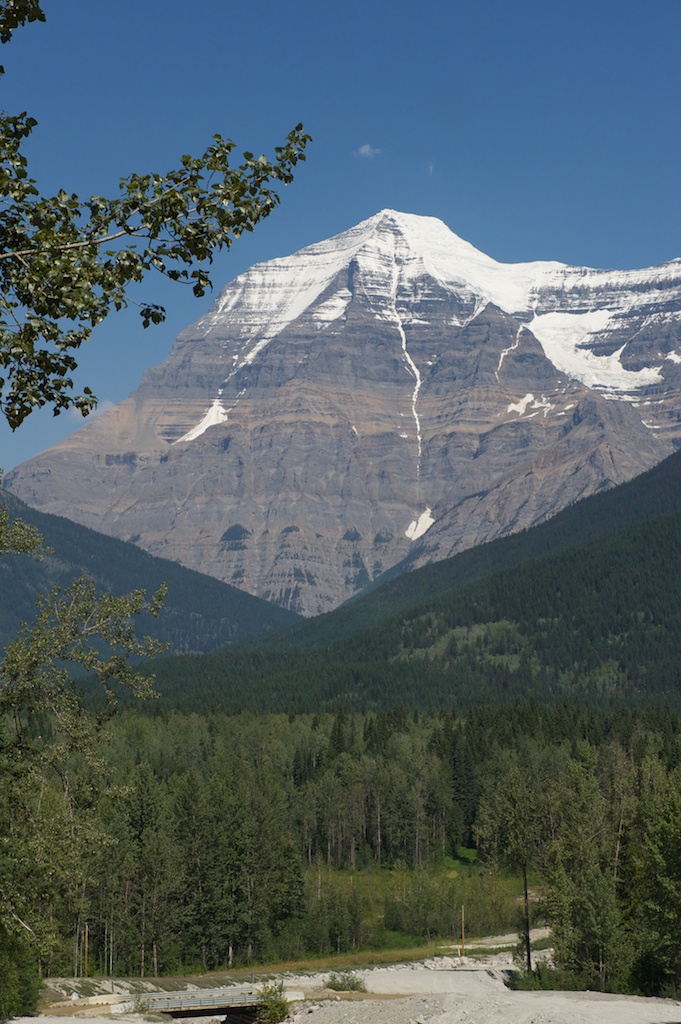
Another challenge is fellow passengers, who will often vie for choice positions at the railings. My best advice: be nice. Get to your spot early, take your pics, and then offer your spot to another shooter.
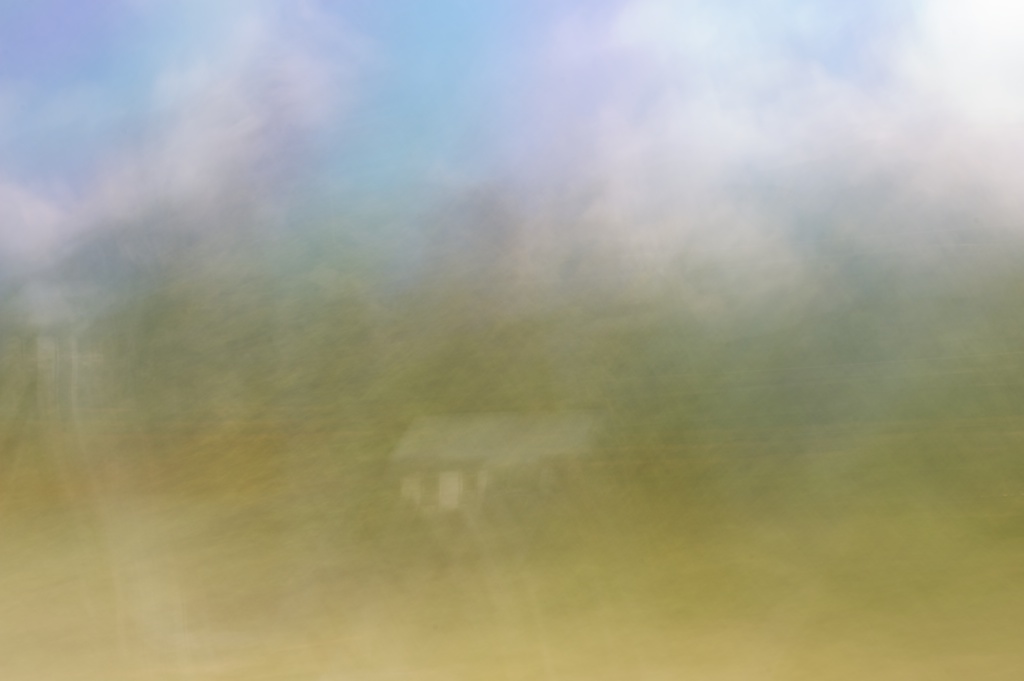
Anyway, shooting on a train gives you one commodity that’s usually in short supply… time. You’re stuck on a track, usually with no Internet and sometimes no phone service. My Canadian train adventures lasted 8-10 hours a day for 4 days total. So, I used the time to play around with my camera. Excuse me, I mean I experimented. I tried using the speed and shaking to my advantage. I first started with a slow shutter speed (1/4 to ½ second) as the train whizzed past trees.
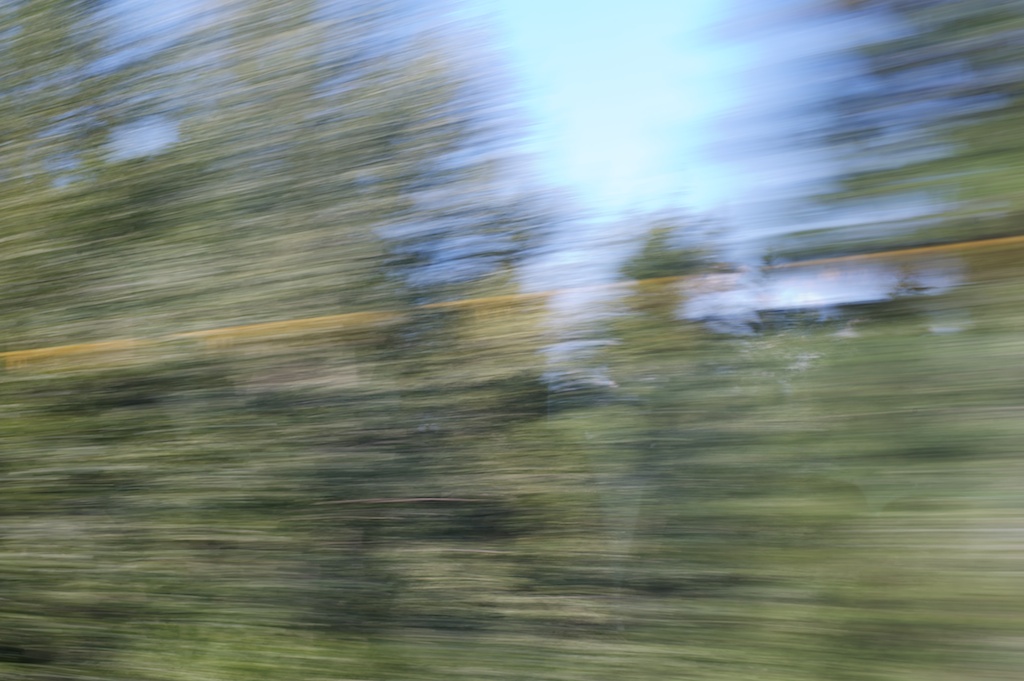
Then I added a polarizer, lowered the ISO as low as my camera permitted, and shot for up to 2 seconds.

Finally, I used a neutral density filter to stretch my exposures out to 5 seconds.
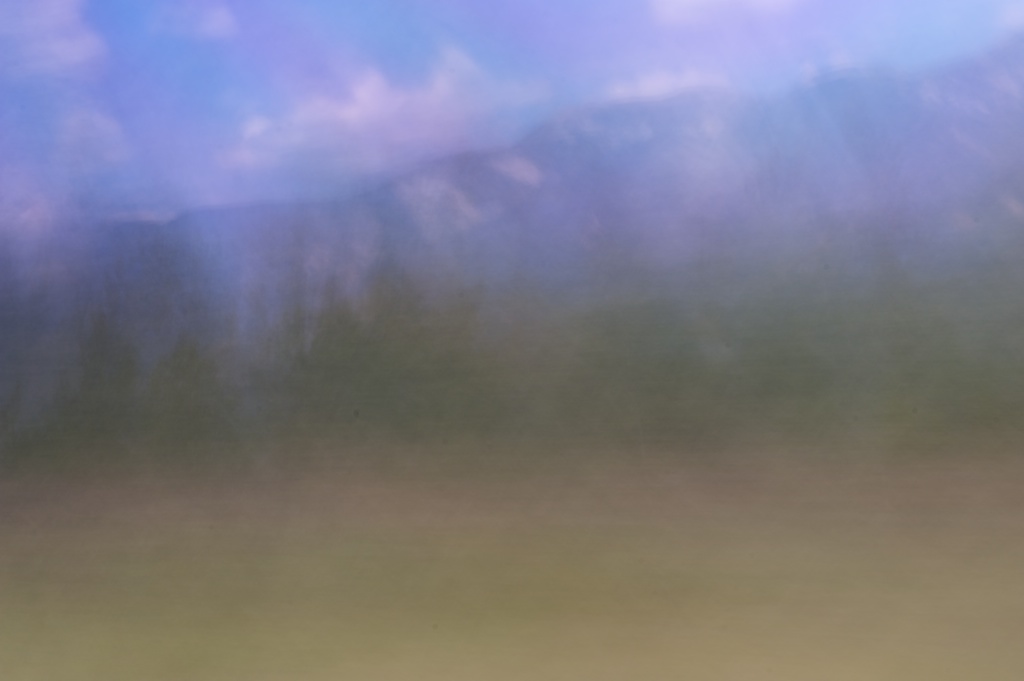
I like the next one. As I was taking the image, an old cabin moved into view.
I’d love to hear from you readers about your reactions to my “experiment” and about your train photo experiences.
Happy training!